
Can Menopause Cause Tendonitis?
Tendon pain during menopause is more common than most women realize, and the decline in estrogen is a key reason why. As estrogen levels drop during perimenopause and menopause, tendons become less elastic, produce less collagen, and are slower to recover from the demands of everyday activity.
Most chronic tendon pain is not true tendonitis but rather tendinopathy, a structural change caused by repetitive overloading without adequate recovery. This distinction matters because rest alone often makes the problem worse, and what tendons actually need is the right kind of progressive loading to heal and get stronger.
Women in midlife can address tendon issues effectively with targeted strength training, activity modification, and guidance from a physical therapist. Programs like Meno-Strength RX are designed to give women in menopause the tools to rebuild tendon resilience and stay active through this stage of life.
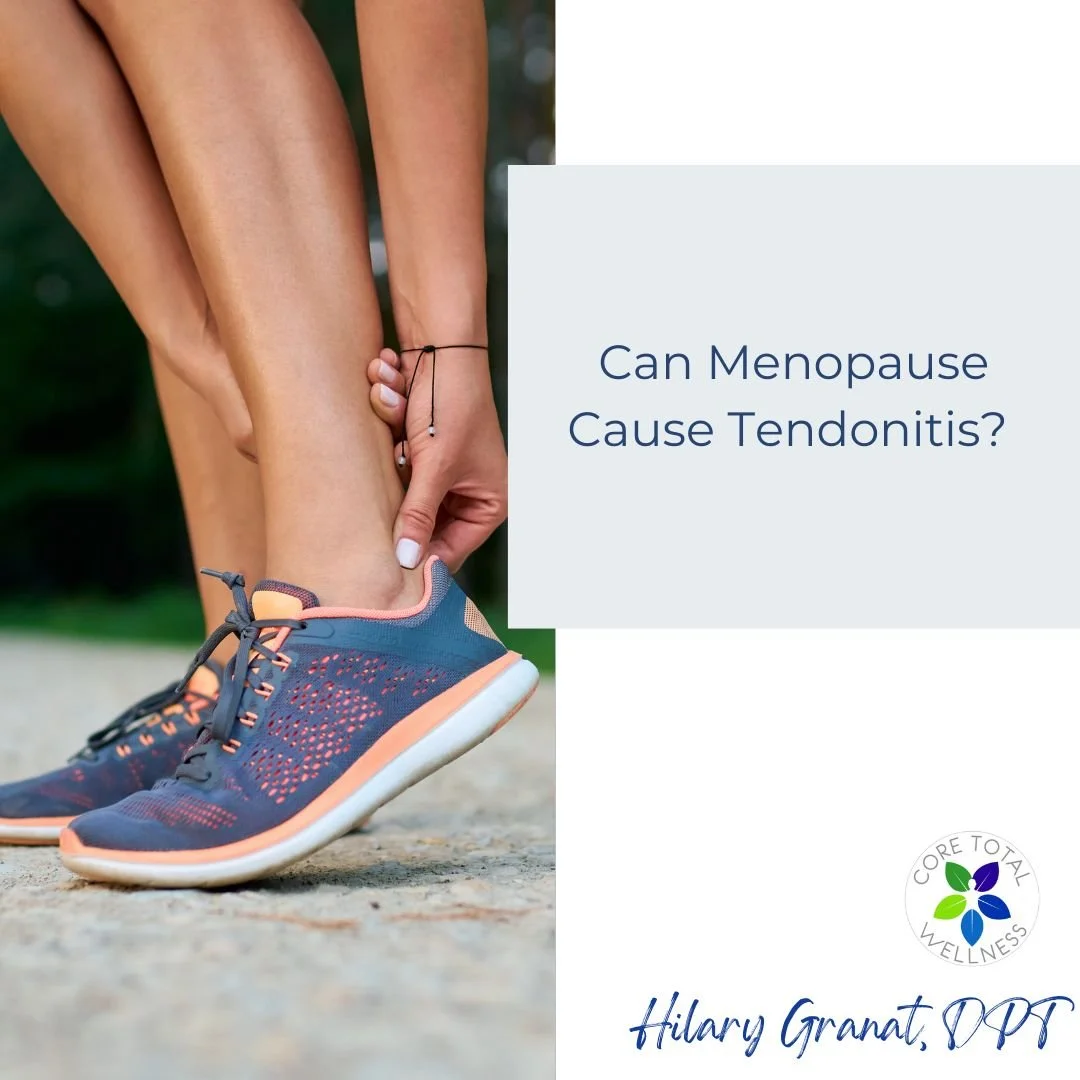
If you are a woman in midlife or beyond, I am sure you have noticed some nagging aches that just won't go away? Maybe it's shoulder pain every time you reach overhead. Tennis elbow that makes opening a jar or playing tennis painful. Heel pain with those first few steps in the morning. An Achilles tendon that seems to complain every time you go for a walk. Or your hip/glute aches with prolonged walking.
As a physical therapist, I see this all the time in women during perimenopause and menopause. Many have never dealt with tendon pain before, yet suddenly they're struggling with injuries that seem to come out of nowhere and take forever to heal.
While menopause doesn't directly cause tendonitis, the hormonal changes of this stage of life (especially the decline in estrogen) can affect your tendons, making them more vulnerable to injury and slower to recover.
What Are Tendons?
Tendons are the strong, rope-like bands of connective tissue that connect your muscles to your bones.
Think of them as the bridge between your muscles and your skeleton (bones). Every time you lift a weight, climb stairs, carry groceries, swing a tennis racket, or simply get out of a chair, your tendons are working hard.
Unlike muscles, tendons don't receive a lot of blood supply. That means they naturally heal more slowly, which is why tendon injuries can linger if they're not treated properly.
Estrogen doesn't just affect your bones; it affects your tendons, too.
So, Can Menopause Cause Tendonitis?
The short answer is not directly. A better way to think about it is that menopause changes the environment your tendons live in.
One of estrogen's many jobs is helping maintain healthy connective tissue. As estrogen levels decline during perimenopause and menopause, changes occur throughout the body, including in your muscles, bones, ligaments, and tendons.
Research suggests that lower estrogen levels may lead to:
Reduced collagen production
Changes in collagen organization
Decreased tendon elasticity
Slower tissue repair
Reduced ability to tolerate repetitive loading
In other words, the same workout, pickleball match, or weekend gardening session that felt easy five years ago may suddenly leave you with a sore tendon that refuses to settle down. That's not because you're weak. It's because your tissues are adapting to a new hormonal environment.
Wait…Is it really tendonitis?
Here's something that surprises many people: most chronic tendon pain isn't actually tendonitis.
The term "tendonitis" means inflammation of the tendon. While inflammation can play a role in the early stages of a tendon injury, many tendon problems that last for weeks or months are better described as tendinopathy.
Tendinopathy means the tendon has undergone changes in its structure and its ability to tolerate load due to repeated stress, overuse, or not having enough time to recover.
This often happens when the demands placed on the tendon exceed its current capacity. Maybe you increase your running mileage, start playing pickleball several days a week, or return to strength training after a long break. The tendon becomes overloaded, struggles to adapt, and gradually becomes less tolerant of the activities you love.
Why does this matter?
Because if we assume tendon pain is simply inflammation, we often treat it the wrong way. Many people stop exercising completely, hoping rest will fix the problem. But too much rest can actually make tendons weaker.
Healthy tendons actually need the right kind of progressive loading to become stronger. It's all about finding the "sweet spot" of challenging the tendon enough to stimulate healing without overloading it.
Common Tendon Problems During Menopause
Some tendon issues seem to become much more common during midlife.
Rotator Cuff Tendinopathy: Pain reaching overhead, washing your hair, or sleeping on one side.
Tennis Elbow: Pain on the outside of the elbow while lifting, gripping, typing, or opening jars.
Achilles Tendinopathy: Pain along the back of your ankle during walking, running, hiking, or climbing stairs.
Gluteal Tendinopathy: Pain on the outside of the hip, especially when lying on that side or walking longer distances.
Plantar Fasciopathy: That familiar stabbing pain in your heel when you take your first few steps in the morning. While plantar fasciitis isn't technically a tendon injury, it often behaves similarly and responds to many of the same treatment principles.
Why Tendon Pain Seems More Common During Menopause (and aging)
Hormones are only part of the story. Several other changes happen during menopause that can increase stress on our tendons.
You may experience:
Loss of muscle mass
Decreased strength
Poor sleep
Slower recovery after exercise
Increased stiffness
Changes in body composition
More sedentary time due to work or caregiving responsibilities
It's often the combination of these factors, not just estrogen alone, that contributes to tendon pain.
What About Hormone Replacement Therapy?
This is a question I hear often. Some studies suggest estrogen therapy may help support connective tissue health in certain women. The research is still evolving, and hormone therapy is not recommended solely as a treatment for tendon pain. However, there is substantial research that shows it does help prevent bone loss as we age.
If you're considering menopausal hormone therapy, it's best to discuss it with your healthcare provider.
What Should You Do If You Think You Have Tendinopathy?
If you think your tendon pain may be related to menopause, don't panic. Tendons are adaptable and respond well to the right treatment, even though they can take longer to recover than any of us would like.
The key is identifying the problem early and addressing it with the right combination of exercise, strength training, and activity modification. Waiting too long or avoiding movement altogether can actually make recovery more difficult.
Check out my Menopausal Tendonitis Treatment blog,where I dive into progressive loading, strength training, nutrition, recovery, and when it's time to seek help from a physical therapist.
The Bottom Line
If you've been following me for a while, you already know that declining estrogen affects bone density during menopause. But estrogen doesn't just affect your bones, it affects your tendons too.
The hormonal changes of menopause can make tendons more vulnerable. The good news is that tendon pain is treatable, especially when you understand what's causing it.
It can feel incredibly overwhelming to know where to start with treating tendonitis and symptoms around menopause all together, especially if you don’t feel like you know what you’re doing when it comes to lifting weights and getting stronger.
Here are a few ways I can help you:
Get on the waitlist for my 1:1 Meno-Strength RX program: Personalized monthly fitness programming for women in menopause and midlife developed by a Doctor of Physical Therapy.
Empower Hour: 1:1 Coaching Session: This highly personalized session can be centered around a specific area that you need coaching on to help you meet your goals and answer any questions you have about menopause and strength training. You will leave this call with a newfound clarity and direction to help you move forward.
Grab my FREE Meno-Strength Sampler (just fill out the form below!): A look inside my Meno-Strength 8-Week program and a way for you to get started TODAY!
[FREE] Get access to my Meno-Strength™ Sampler Program
A FREE sample program that will get you started with strength training in midlife and menopause and beyond. Just type your first name and email below and it will be sent to you! Be sure to check your spam if you don’t receive it within a few minutes!